GOP Medicaid Cuts: Multifaceted, Severe, Deadly, Machiavellian

The GOP is well on its way to enacting major cuts to Medicaid. These have multiple components, with serious damage to care access, and thousands of added deaths. Surprisingly, the GOP has a strategy to minimize political blowback.

( Posted here in its entirety, from Health Justice Monitor, an affiliate of our parent organization, Physicians for a National Health Program.)

May 19, 2025

Tracking the Medicaid Provisions in the 2025 Reconciliation Bill
Kaiser Family Foundation (KFF)
Updated: May 19, 2025

Requires states to impose cost sharing of up to $35 per service on expansion adults with incomes 100-138% FPL; maintains existing exemptions of certain services from cost sharing and limits cost sharing for prescription drugs to nominal amounts. Maintains the 5% of family income cap on out-of-pocket costs. Effective Date: October 1, 2028

Reduces the expansion match rate from 90% to 80% for states that use their own funds to provide or support health coverage … for individuals who are not lawfully residing in the US. Effective Date: October 1, 2027

Requires states to condition Medicaid eligibility for individuals ages 19-64 applying for coverage or enrolled through the ACA expansion group on working or participating in qualifying activities for at least 80 hours per month. Effective Date: January 1, 2029

Limits retroactive coverage to one month prior to application for coverage. Effective Date: October 1, 2026

Delays $8 billion annual reductions in subsidies for hospitals with high uninsured and Medicaid rates to September 30, 2028. 

Blocks implementation of long term care nurse staffing requirements.

Blocks Medicaid participation for large not-for-profits providing primarily reproductive health care, i.e., Planned Parenthood.

House Republicans’ Medicaid Cuts and Associated Lives Lost
Center for American Priorities
May 15, 2025

House Republicans’ radical new budget plan proposes requiring states to implement Medicaid work reporting requirements for adults enrolled through the Affordable Care Act’s (ACA) Medicaid expansion. Under this proposal, nonpregnant, nondisabled, noncaregiver adults ages 19 to 64 would be required to document at least 80 hours per month of work or qualifying activities (such as volunteering) in order to maintain their Medicaid coverage. Otherwise, they would need to seek approval for a qualifying exemption.

Evidence from prior state-level implementations show that bureaucratic paperwork requirements do not increase employment but do result in large-scale coverage losses—even among those who are working or should be exempt from the requirements. 

The consequences of such coverage losses, however, are not just administrative: For thousands of Americans, they would be deadly. New estimates from the Center for American Progress show that 6.9 million people losing coverage by 2034 as a result of congressional Republicans’ proposed paperwork requirements would lead to more than 21,600 avoidable deaths nationally each year. [Provides table of avoidable deaths for selected Congressional districts.]

Comment by: Jim Kahn

Medicaid cuts in the House budget reconciliation bill just passed out of committee are a marvel of multidimensionality, severity, lethality, and politically adroitness. One by one:

Multifaceted: As inventoried by KFF, the changes are far-reaching in type, including enrollee cost-sharing, lower federal payments for states supporting undocumented immigrants, a work requirement, limited retroactivity, blocking minimum nursing staffing levels finalized under Biden, and proscribing participation by Planned Parenthood.

Severe: These are huge changes, with outsized increases in state costs; impaired affordability of care for enrollees with tenuous finances; millions of eligible individuals excluded from coverage by onerous (and ineffective) work requirements; dangerous nursing levels; and loss of a highly regarded provider organization. These shifts will massively impair access to care, with millions losing coverage and millions more facing new financial barriers. It will buffet state budgets, particularly in blue states that help the undocumented get coverage.

Deadly: As excerpted above, CAP estimates 21,600 added annual deaths, based on a 2017 study of Medicaid-associated reductions in mortality. Other research supports the substantial life-saving effects of Medicaid, including a comprehensive 2021 study using national surveys and datasets, and a just-published article in Lancet. There’s no question: cutting health insurance kills.

Machiavellian: The political chatter around these expected Medicaid cuts was that they would hurt the GOP in the 2026 midterms and 2028 presidential election. We underestimated the GOP political acumen / deviousness. Note that the most obviously hurtful provisions (e.g., cost-sharing and work requirements) go into effect only in late 2028 / early 2029 – thus minimizing pain to voters and electoral harm to the GOP in the interim. Guess who’ll be blamed by the voters for late 2028 and early 2029 Medicaid cuts? The Dems, if they win. Of course the Dems can cancel the cuts, but not in time to avoid significant political damage. And with GOP tax cuts (for the rich) and the Trump-tariffs-induced economic downturn, the federal budget won’t exactly be flush with funds to restore the program.

It’s truly astounding how complex Medicaid rules, funding, and politics have become. Take an apparently good idea – provide health insurance for the poor – and ultimately what you get is a major political distraction, with the immediate losers being the poor, and the long-term losers being the country. If only, if only … we could figure out a way to pay for health care simply, efficiently, generously … whereby we could remove our medical care from the dirty domain of party politics.

About the Commentator, Jim Kahn

Avatar photo

Jim (James G.) Kahn, MD, MPH (editor) is an Emeritus Professor of Health Policy, Epidemiology, and Global Health at the University of California, San Francisco. His work focuses on the cost and effectiveness of prevention and treatment interventions in low and middle income countries, and on single payer economics in the U.S. He has studied, advocated, and educated on single payer since the 1994 campaign for Prop 186 in California, including two years as chair of Physicians for a National Health Program California.


The Attacks on U.S. Health Care

This post is a sharing of part of the newsletter of the Committee to Protect Health Care

Wednesday, February 26, 2025

Edited by Chris Savage

View the full newsletter on the web here: ProtectMed.org/MidweekPage56.

Welcome to this week’s edition of The Midweek Page, a weekly newsletter from the Committee to Protect Health Care designed to keep members, advocates, and partners informed on the news, public policy, and politics of health care.

REMINDER: Your support makes the important work we do possible. Please consider becoming a member today by going to CommitteeToProtect.org/membership.

Attacks on Medicaid

ACTION! ››› Physicians can unite and take action to protect patient access and public health. Save Medicaid HERE!

Last week, President Trump told Sean Hannity that “Medicare, Medicaid, none of that stuff is going to be touched.” The next morning, however, he posted on Truth Social that he supported the Republican’s budget package which would require massive cuts to Medicaid.

Leading up a potential House vote yesterday, Republicans were divided on whether or not to support what Trump is calling his “big, beautiful bill”. From reporting by Forbes:

The [GOP] fiscal year 2025 spending plan would likely lead to about $800 billion in cuts from Medicaid over the next decade, part of $2 trillion in overall spending cuts to help pay for $4.5 trillion in tax cuts plus boosts in defense and border spending. […] While the resolution doesn’t explicitly call for cuts to Medicaid, skeptical lawmakers have warned there’s virtually no other way to achieve the $880 billion in cuts the resolution tasks the Energy and Commerce Committee with finding without slashing Medicaid spending. […] Moderate Republicans in vulnerable districts and those where significant portions of their constituents are on Medicaid have expressed resistance to any Medicaid spending cuts. […] 

Assuming all Democrats vote against the spending plan, Republicans can afford to lose just one vote under their 218-215 majority in the House.

In order to achieve the goal of cutting Medicaid by $880 billion, Republican lawmakers are proposing adding a work requirement to receive Medicaid benefits. As health care advocates know, Medicaid is health insurance, not a jobs program, and work requirements, explicitly spelled out in the notorious Project 2025 manifesto, are nothing more than sneaky cuts to Medicaid. Not only that, evidence shows they don’t work:

As Congress considers expanding work requirements to more states, Gibson said Arkansas and Georgia provide real-world examples of how these programs work.

“It costs a lot more than people think it’s going to cost, because the administrative costs are very high compared to the actual medical care that’s provided,” Gibson said. “It’s not cost-effective.”

In the end, the House voted to pass the budget resolution at just after 8 p.m. ET on Tuesday night.

The debate over kneecapping Medicaid is giving Congressional Democrats plenty of fodder to go after their Republican colleagues. And they plan to use it:

House Democrats hammered Republicans on health care to win back the majority in 2018. Now, they are preparing to punish them again.

Private messaging guidance from party leaders, sent to Democratic lawmakers ahead of a planned Tuesday budget vote and obtained by POLITICO, urged them to accuse Republicans of “betray[ing] the middle class by cutting Medicaid while giving huge tax breaks to billionaire donors.” And it encouraged members to “localize” the effects of slashing billions from Medicaid.

“It is critical that you make the damaging local impacts of this legislation real for the people you represent,” said the memo circulated on Monday.

ACTION! ››› Physicians can unite and take action to protect patient access and public health. Save Medicaid HERE!

Trump Administration Watch

Robert F. Kennedy Jr.

Since taking the helm at the Department of Health & Human Services (HHS), Robert F. Kennedy Jr (RFK Jr) has created turmoil and anxiety that is interfering with the important work the department does. He has overseen the gutting of various agencies that work on drug and device approvals, maintaining food safety and responding to new threats, like avian flu, fostered a rise in vaccine skepticism (including postponing an annual CDC vaccine meeting), called into question antidepressants used by many Americans to treat mental health issues, slowed or even halted essential health care research, and driven many leaders in the Food and Drug Administration, National Institutes of Health, and Centers for Disease Control and Prevention to resign:

Kennedy has taken control of the nation’s health apparatus amid a barrage of firings and abrupt policy shifts, marking the start of a tenure that allies and adversaries alike equate to a hostile takeover of the agencies he spent the last two decades maligning. […]

The upheaval triggered by Kennedy’s confirmation as the nation’s top health official has shaken much of the HHS workforce, which endured days of mass layoffs that hollowed out whole offices and decimated morale.

Meanwhile, as makers of non-regulated supplements see this as a major opportunity to cash in, Big Pharma is feigning excitement about RFK Jr. taking the helm at HHS:

“We have a disruptor-in-chief in President Trump and a new HHS secretary — both of which are committed to overturning the status quo,” PhRMA president and CEO Steve Ubl said in his remarks at the industry group’s policy forum this week.

“We embrace disruption because we are disruptors,” he added. “We see an opportunity to fix what’s broken, to get more impact out of every health care dollar we spend and to make America healthier by launching a new era of medical innovation.”

The reality is that RFK Jr.’s antagonism toward vaccines and pharmaceuticals’ role in treating chronic illness has pharmaceutical executives frightened. Nonetheless, they have quickly abandoned their supposed commitments to public health in a desperate attempt to remain in the good graces of an unabashedly anti-health administration.

The U.S. Supreme Court has scheduled arguments in a case where Trump administration is defending ACA. The Trump administration has taken the surprising position of defending the status quo. However, it is believed to be a ploy to give RFK Jr. more control over an independent government panel known as the U.S. Preventive Services Task Force, a volunteer panel of national experts in disease prevention and evidence-based medicine:

The Supreme Court on Monday scheduled arguments for April 21 in a case that could decide the legality of the Affordable Care Act’s (ACA) requirement that insurers cover certain preventive services. 

In a surprising move, the Trump administration said it will continue the Biden White House’s defense of that requirement.  

But some legal experts said the arguments being presented by the Justice Department indicate a desire to give Health and Human Services (HHS) Secretary Robert F. Kennedy Jr. substantial control over an independent government task force.

Elon Musk

Elon Musk’s “Department that’s not a department” of Governmental Efficiency’s (DOGE) slash-and-burn approach to reducing the federal work force, which appears to be having an out-sized impact on health agencies, is now coming back to bite them. The New York Times reports that the FDA has reinstated fired medical device, food, and legal staffers:

The workers had been fired as part of the Trump administration’s efforts, led by Elon Musk, to significantly downsize the federal government and cut costs. But the salaries of many of the fired F.D.A. staff members had been funded by fees companies pay the F.D.A., not taxpayer money.

Last week, Musk’s so-called DOGE team sent out a letter telling federal employees to provide a list of “approx. 5 bullets of what you accomplished last week” by Monday of this week or be fired. (Their plan is to use artificial intelligence to determine who isn’t pulling their weight and should be fired.) The bullheaded directive appears to have largely flopped as department heads across the federal government have instructed employees not to comply. For example, at HHS, employees were told participation in Musk’s demand is voluntary and poses a national security threat:

Leadership at the Department of Health and Human Services (HHS) told employees the mandatory requirement to respond to an unusual email from the Office of Personnel Management (OPM), which asks each worker in the government to name five productive tasks from the past week, is now rescinded.

Participation is voluntary and “there is no impact to your employment with the agency if you choose not to respond,” an email shared with Fierce Healthcare shows. […]

Perhaps most alarmingly, workers were told to “assume what you write will be read by malign foreign actors and tailor your response accordingly.”

As Musk is working to blow up our federal government and meddle in European elections, he’s also showering money on a conservative running for the Wisconsin State Supreme Court. The New York Times reports that the race has important implications for reproductive rights in the state:

The state’s abortion laws, as well as its legislative and congressional district lines, are likely to be determined by whichever faction controls the state high court in coming months.

Finally, in other Trump administration news, the Washington Post reports that after planning to shut down the free COVID-19 test program, the federal government reversed itself. Also, AXIOS reports that an annual rare disease meeting has been pushed off by HHS. Reproductive Rights

On Monday, the U.S. Supreme Court declined to hear a case, Hill v. Colorado, that would do away with buffer zones around abortion clinics and ultra-conservative Justice Clarence Thomas is livid:

“I would have taken this opportunity to explicitly overrule Hill,” he wrote in his dissent… He argued the court erroneously treated the Hill case differently than others pertaining to the First Amendment because abortion was involved, writing, “Hill’s abortion exceptionalism turned the First Amendment upside down.”

In Wyoming, state legislators are poised to enact a law that would likely shut down the only clinic providing procedural abortions in the state.

In nearby Oklahoma, anti-abortion activists want to give women the death penalty for getting an abortion:

A bipartisan coalition of state senators rebuffed a bill that could have subjected women who receive an abortion to the death penalty, but supporters are vowing to resurrect it.

“We abolishioners will not rest until we have effected the abolishment of human abortion,” said Alan Maricle, who is part of the Abolitionist Society of Tulsa. […]

The measure would have subjected women who receive an abortion to homicide charges and penalties including life in prison and death sentences. 

The bill would have also outlawed abortion-inducing drugs.

Prescription Drug Affordability Boards

Colorado

On February 15, The Daily Sentinel in Grand Junction published an op-ed by a retired Colorado emergency medicine physician and Committee Advocate Dr. Tom Meason titled, “Prescription drugs do nothing if patients can’t afford them”:

As a physician, I have seen firsthand the challenges and inequities of our health-care system. But nothing prepared me for the experience of navigating it myself while seeking treatment for a peripheral nerve injury.My physician recommended Enbrel, a medication most commonly prescribed for autoimmune conditions, to help manage my condition. While I was hopeful that it might bring relief, the financial burden quickly became its own source of pain. That’s why I’m glad that Colorado’s Prescription Drug Affordability Board has an opportunity to make Enbrel more affordable, and why I urge them to take it. […]


Committee to Protect Health Care
1720 W. Division Street, Suite 18
Chicago, IL 60622

Contributions to the Committee to Protect Health Care 501(c)4 are not tax deductible.

Wrong target, wrong weapon

Use non-violent means to address our health care woes

A simple statement from Hank Abrons, published in the San Francisco Chronicle on December 9:

“The assassin who shot United Healthcare CEO Brian Thompson to death on December 4 aimed at the wrong target, used the wrong weapon, and wasn’t the right person to do the job.

The target should be United Healthcare’s profit-seeking business model.

The weapon must be legislation to replace private health insurance with universal health insurance through a fair publicly financed program.

The right folks to do the job are the voters and our elected legislators.

We must remove health insurance CEOs by nonviolent political action. Let’s go on the offense to establish single payer health insurance  (AKA “improved Medicare for all”). We know how to do this. We’ve done the research, developed the policies, written the legislation, shown the cost savings, and more.

It’s up to all of us to help abolish private forprofit health insurance, may it R.I.P.  Then we can rejoice and enjoy the health we deserve.”

I know a farmer who…

“Though Americans’ per person spending on healthcare totals more than $13,000, and polls as a top issue, the system is unmoved. With the Trump/Harris horserace in its final furlong nothing of substance is on-offer from either of the presidential wannabes. Neither party will acknowledge the institutional running sore that is the US healthcare regime.”

Read Richard Rhames’ complete essay HERE

(Photo by Cate Bligh on Unsplash)

Growing Discontents

In Counterpunch, Richard Rhames offers his perspectives on the history of failed attempts to achieve universal healthcare in the United States:

“…A lifetime of living without health insurance in a country where health care is just another profit extracting commodity has some downsides one discovers as one senesces. Blood clots in the wrong place can lead to weeks in hospitals, rehab facilities, and countless waiting rooms where …… one waits…
…Still, we who came to maturity at what turned out to be the crest of the New Deal have aged into Medicare and so have acquired the right under law to be patched up and sent back into the world. Back then it was assumed that public insurance for old folks was merely a beach-head in the decades-long political battle for universal healthcare.”

“…Alas, the war against Vietnam spelled the end of the New Deal Democratic Party …
…and the “beach-head” of Medicare is being converted into Medicare “Advantage”- just another private corporate insurance “product” dedicated to mining the federal treasury for private profit while denying care.”

Read the complete essay in Counterpunch HERE.

Richard is a farmer, activist, writer, social historian and musician. Recently he was featured in the Local Spotlight of the Saco Bay News: “Richard has developed a reputation as someone who means what he says, and says what he means.”

Rural Communities Face Primary Care Physician Shortage

by Liz Carey, The Daily Yonder
April 22, 2024

A new study from the American Academy of Family Physicians’ Robert Graham Center (AAFP), co-funded by the Milbank Memorial Fund and The Physicians Foundation, has found that communities across the country are struggling to meet the demand for primary care physicians, as well as to retain those physicians in their communities. While it’s difficult all over, Dr. Yalda Jabbarpour, lead researcher on the study, said, it is more difficult for rural communities.

“Ten years ago, we knew we had a problem with primary care physician density,” Jabbarpour said in an interview with the Daily Yonder. “Today, even though people are older, and therefore sicker, and the population is growing and the demands are higher, we actually have less physicians to fill that need.”

Rural communities tend to depend more on primary care clinicians, Jabbarpour said, especially family physicians.

In 2021, 37% of all physicians in training (residents) began training in primary care, yet only 15% of all physicians were practicing primary care three to five years after residency, the study found. 

More than half of those residents with the potential to enter primary care subspecialized or became hospitalists instead, research showed. And only 15% primary care residents spent a majority of their time training in outpatient settings where a majority of the US population receives their care and fewer than 5% of primary care residents spent time training in rural and other underserved communities, the researchers found.

The AAFP study also found that there is a slightly higher density of primary care providers in rural and underserved areas. Looking at social drivers of health – like housing, transportation, income and education – and how they affect residents’ health status, the study found that people in areas that have more social disadvantages (less adequate housing, barriers to transportation, and lower income, for instance) had higher rates of chronic disease and worse health outcomes.

In 2021, the overall density of primary care in areas that had more social disadvantages was 111.7 per 100,000, while the density of areas with fewer social disadvantages was 99.5 per 100,000. However, researchers said, while those measures are hopeful, they still are insufficient.

“This finding may be attributed, in part, to the success of the community health center movement, which aims to place clinicians in areas of highest social need,” researchers said. “Still, this promising finding needs to be tempered by the reality that even this higher density of primary care clinicians may not meet patient demands given that people living in high-need areas tend to have higher levels of medical need.”

“Rural areas do much better at training and retaining a primary care workforce, but at the same time, it’s still not enough to meet the growing demand,” Jabbarpour said.

Family medicine, like any other medical specialty, she said, distributes itself the same as the U.S. population. Rural areas across the country, according to the U.S. Census Bureau, are home to 19.88% of the total U.S. population. Jabbarpour said that a correlating percentage of primary care physicians would be located in a rural area. But because rural communities tend to be statistically older and sicker, the need in rural communities is greater.

One way to resolve the issue would be for more investment into primary care, the study found. Changing the overall portion of health care spending done by the Centers for Medicare and Medicaid (CMS) on primary care would help invest more federal dollars into primary care, as would investment by the U.S. Department of Health and Human Services (HHS) into new rural health clinics, health centers and Indian Health Service (IHS) facilities in shortage areas, the report said.

“The United States is underinvesting in primary care, and Medicare’s fee schedule – which lists fees for services – is the chief culprit,” the report said. “It undervalues primary care services relative to specialty services and pays on a per visit basis, discouraging non-visit services like emails and phone calls as well as care from other members of the primary care team.”

Jabbarpour said another key to getting more primary care physicians into rural communities is for colleges to recruit from rural communities.

“Medical schools should be recruiting from those communities because people tend to go home to practice,” she said.

Bringing doctors into rural areas means helping their spouses find work as well.

“There are physicians who want to go into rural areas, but their partners don’t have opportunities for work in rural areas if they’re not also in medicine,” she said.

The biggest way to bring primary care physicians into rural areas, she said, was to expose them to it. The research has found that physicians who train in Teaching Health Centers and rural training tracks are more likely to practice in those communities.

“I know not every rural area is the same. In some rural areas, it’s probably an area that physicians would love to live and grow their families in if they knew about it,” she said. “I know that’s hard because that takes hospital systems really doing active recruitment or setting up rural training tracks, and reaching out to medical schools around the country and saying, hey, send your students here, we’ll give them housing and they can get exposure to this beautiful slice of heaven that we have and then they’ll want to come here.”

This article first appeared on The Daily Yonder and is republished here under a Creative Commons license.

The Case for State-Based Single-Payer Healthcare

“Throughout U.S. history, states have been the much needed small laboratories that have succeeded in developing social innovations that eventually went national.”

In the following article in Common Dreams, healthcare advocates from One Payer States make their case for state-based universal healthcare programs, to pave the way to a national Improved and Expanded Medicare for All.

https://www.commondreams.org/opinion/state-based-single-payer-healthcare

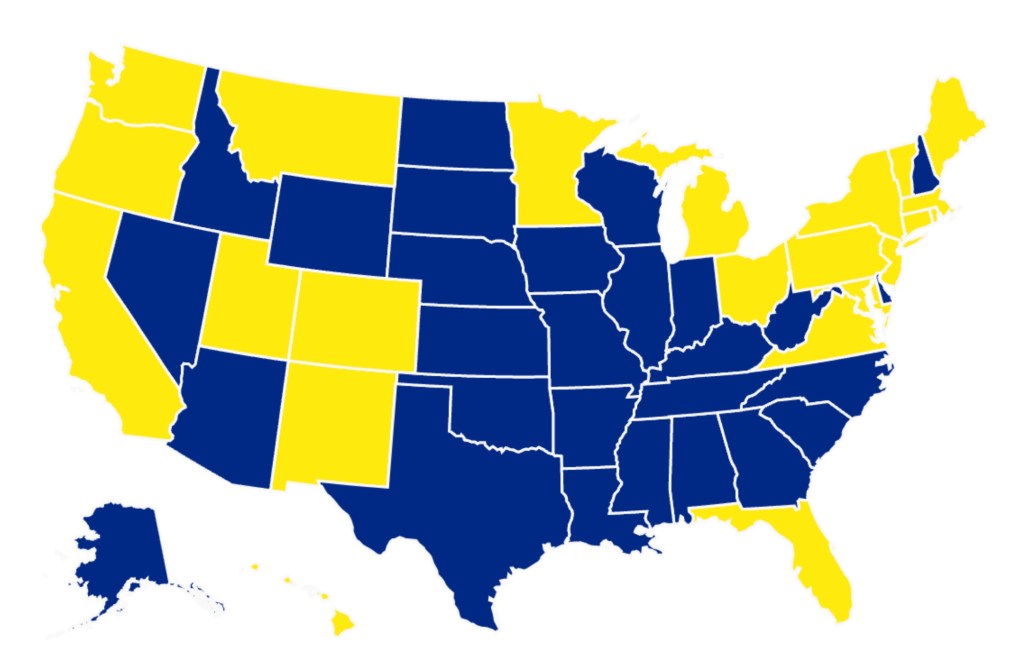
States in “yellow” have active movements for state-based universal healthcare. Image credit: One Payer States
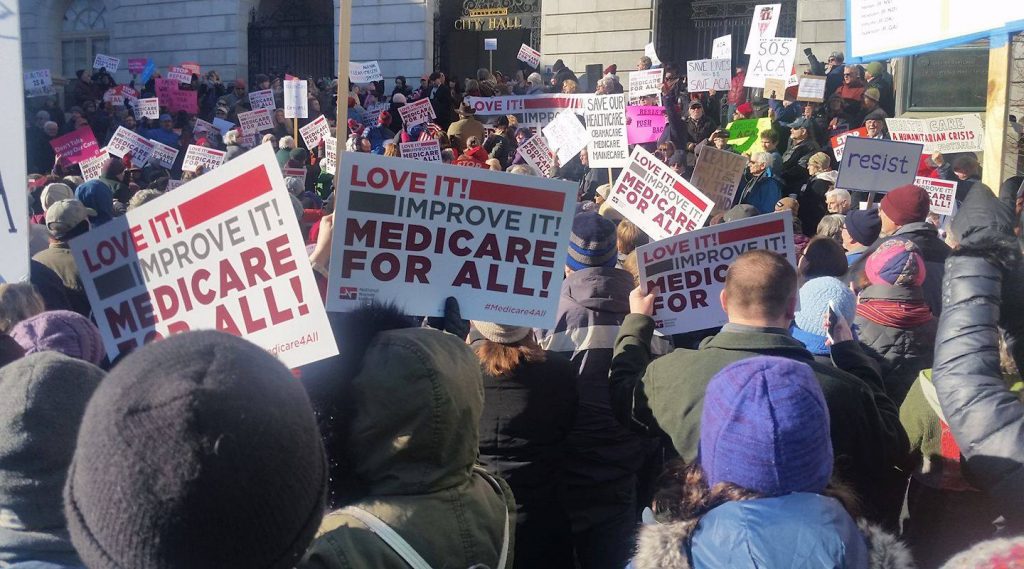
Advocates rally for Healthcare for All at Portland City Hall.
Maine AllCare photo, 2017.

Rep. Ro Khanna Introduces Federal Legislation to Support State-Based Universal Health Care

Washington, DC – Today, Representative Ro Khanna (CA-17), member of the House Committee on Oversight and Accountability, reintroduced the State-Based Universal Health Care Act. Recognizing the unique position of American states to lead the push for universal health care, Rep. Khanna’s bill provides states with federal funding streams and regulatory flexibility to support affordable, universal health care plans.

Photo by Samuel Schroth on Unsplash

“Universal health care will save lives and help fix our broken system that has left millions of Americans with crushing medical debt. As we work towards universal health coverage at the federal level, we should also support state-based plans. I’m proud to lead this critical legislation to give every state the power to provide coverage for their residents while we continue working to make Medicare for All a reality,” said Rep. Ro Khanna (CA-17). 

The State-Based Universal Health Care Act creates a waiver to allow states to develop their own plans to provide access to health care for all their residents via access to federal funding streams and regulations flexible enough to support affordable, universal health care plans. To apply for the waiver, participating states or groups of states must propose plans to provide health care coverage for 95 percent of their residents within five years. 

After that time, participating states would be required to demonstrate they reached coverage targets and provide a plan to cover the remaining five percent of their population. States that do not reach the 95 percent target after five years would have to revise their plan to achieve the targets, or risk losing their waiver. Federal technical assistance would be made available for states seeking help in developing and implementing these plans.

The State-Based Universal Health Care Act also requires benefits provided under state plans be equal to or greater than what federal beneficiaries receive now. An independent panel of health care experts and officials would evaluate whether a state’s proposal meets the requirements and would then provide a public recommendation of waiver application approval or rejection to the Secretary of Health and Human Services.

The provided regulatory flexibility and funding streams combined include: (1) the requirements for the establishment, creation, and maintenance of health benefit exchanges; (2) cost-sharing reductions under the ACA; (3) premium tax credit and employer mandate under the ACA; (4) Medicare; (5) Medicaid; (6) CHIP; (7) FEHBP; (8) TRICARE; and (9) ERISA pre-emption provision. States will have the freedom to devise their own individual state-based universal health care programs, as long as they meet the coverage breadth and depth requirements.

“In the wealthiest nation on the planet, no one should be without health care. Universal health care is the lifeline that millions of people need so they don’t have to decide between getting critical medication and putting food on the table, which is why I’m proud to join Representative Khanna in introducing legislation to support state-based universal health care. This is one of many important steps towards making Medicare for All a reality. Health care is a human right, period, and we must make sure our advocacy and our legislation reflect that,” said Representative Jamaal Bowman, Ed.D (NY-16). 

“Every American deserves access to quality health care, regardless of their zip code or income level. Giving states the choice to create their own universal health plans isn’t just a practical investment, it’s a moral imperative. This is a step toward ensuring everyone can access quality, affordable and appropriate health care,” said Representative Val Hoyle (OR-4).

“Year after year, large pharmaceutical companies rake in grossly excessive profits while hard-working Americans are forced to choose between affording their medicine and paying rent,” said Rep. Barbara Lee. “Health care is a right, not a luxury. It’s past time we enacted universal health care so our communities can get the care they need without worrying about the cost. This legislation is a critical step to expanding health care coverage on the statewide level as we work to implement Medicare for All nationally,” said Representative Barbara Lee (CA-12). 

“We all could be one diagnosis away from bankruptcy. In one of the richest countries in the history of the world that is unacceptable. Health care is a human right, and this bill gets us one step closer to making sure that every single person gets the care they need—and deserve,” said Representative James P. McGovern (MA-02). 

“At a time when healthcare costs are rising and millions face medical debt or lack insurance coverage, Rep. Khanna’s bill is a pragmatic step toward the goal of affordable, comprehensive healthcare for all Americans. Empowering states to develop universal healthcare plans allows for local innovation while also expanding access to care. This thoughtful legislation will give states the tools they need to ensure all their residents can access the quality, affordable healthcare coverage they deserve. Medicare for All can still be achieved at the federal level, in the meantime we cannot allow millions of Americans, including nearly 300,000 Minnesotans, currently uninsured to go without coverage,” said Representative Ilhan Omar (MN-05). 

“Everyone across the country should have access to quality, affordable healthcare. As we continue to work towards Medicare For All, the State-Based Universal Health Care Act will help ensure that members of our communities can access health care without being overburdened by medical debt. This bill is an important part of our work with President Biden to lower health care costs for American families,” said Representative Adam Smith (WA-09).

“The State-Based Universal Health Care Act is a crucial step towards transforming our healthcare system into one that is more equitable and accessible for all. It empowers states with the necessary resources and flexibility to tailor healthcare solutions to meet the unique needs of their residents, moving us closer to achieving universal healthcare coverage,” said Representative Shri Thanedar (MI-13). 

“Americans are clamoring for reform to our broken health care system and states like California and New York are leading the way. This bill would make it easier for every state to take the necessary steps to implement single-payer health care and ensure that everyone in the state can get the care they need when they need it. Not only that, such reforms would unlock massive savings for both states and cities, many of which are facing huge increases in health care costs. We applaud Rep. Khanna for pushing forward this important piece of legislation,” said Eagan Kemp, Health Care Policy Advocate, Public Citizen.

“Rep. Khanna’s reintroduction of the State-Based Universal Health Care Act (of 2023) represents a remarkable opportunity for Congress to assist states and regions in implementing universal health care systems with federal healthcare dollars and legal protections. State innovation is a hallmark of American political, economic, and social reform. This is how we expanded voting rights and ended child labor abuses. And, similar to Canada’s path to national health care, through the powerful example of a single province (Saskatchewan), one, two or three U.S. states or regions will model the efficient, patient-centered, practitioner-friendly healthcare system that will go national in a few short years,” said Chuck Pennacchio, President of One Payer States.

Beware: Medicare Advantage plans may work well for you…until you get sick

“Last year, the federal Office of the Inspector General found that at least 13% of prior authorization denials were inappropriate and 18% of payment denials were unjustifiable.”

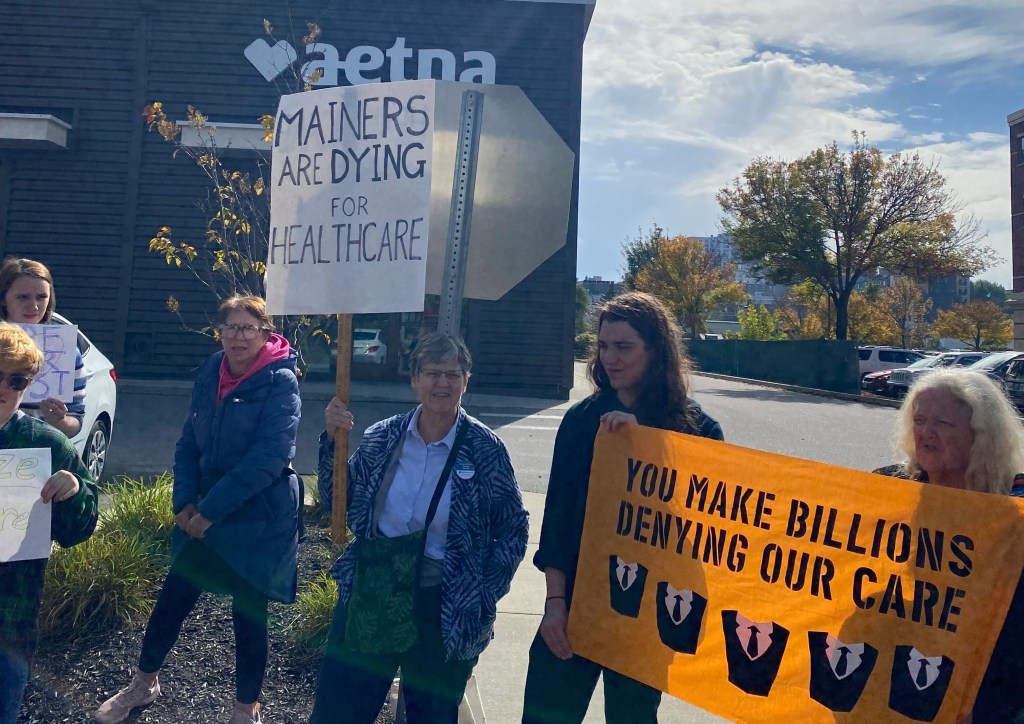
In 2023, Maine AllCare and PNHP supporters attended the Maine People’s Alliance protest against insurance company denials

The Medicare program’s annual open enrollment period extends from Oct. 15 to Dec. 7. During this period, beneficiaries can buy supplemental private insurance (Medigap plans) to cover Medicare’s substantial deductibles and copays. 

With this additional protection, beneficiaries incur virtually no out-of-pocket cost payments and can consult any hospital and doctor who has signed up with Medicare. Unfortunately, the cost of these “Medigap” plans has steadily risen, and now cost approximately $2,000 annually. This represents a financial hardship for many senior citizens.

After a series of successful lobbying blitzes beginning in the 1980s, the health insurance industry “persuaded” the U.S. Congress to create a second type of option: Medicare would make regular payments to private plans, which would then be responsible for paying the doctors and hospitals. 

And the insurance lobby also succeeded in getting Medicare to grossly overpay the private plans, which are now called “Medicare Advantage” plans, so that every time someone signs up for one of these plans, the Medicare trust fund currently pays approximately 25% to 30% more than Medicare would have paid out had the patient remained in traditional Medicare.

These overpayments are so extravagant that these plans have enough money to:

1. Keep the monthly premiums quite low.

2. Offer extra benefits — eyeglasses, hearing aids, and some dental care.

3. Spend tens of millions on advertising and pay insurance brokers a good deal extra for Medicare Advantage sign-ups.

4. Provide lavish dividends to investors and upper-level management.

So the Medicare Advantage option works out really well for insurance companies, but what does it mean for beneficiaries who sign up for the plans? The advertising blitz typically incorporates well-paid geriatric opinion leaders like Joe Namath to extol these plans, asserting that they cover everything in traditional Medicare and more, and for a lower price.

My mom taught me that if something sounds too good to be true, it probably is just that.

Here’s the rest of the Medicare Advantage story:

  • The Networks: Unlike traditional Medicare, which covers care from nearly every physician and surgeon in the country, Medicare Advantage plans confine you to a limited network of physicians. This may work out if all your health problems turn out to be common ones. But if you’re traveling out of area, or if your illness is serious and less common, there’s a good chance that the designated network will not provide you the best treatment.
  • The copays: If you buy traditional Medicare supplemental insurance, you’re responsible for minimal out-of-pocket payments. This is not the case for Medicare Advantage. You can expect significant copays with nearly all the medical services you receive. 
  • If you use a service that generally healthy people receive — vaccines, primary care visits, or screening mammography — copays will be minimal. But when you become ill, well, that’s a different story. Medicare Advantage plans are permitted to charge up to $8,300 annually — and considerably more if you dare to stray from the plan’s network of physicians. And pharmacy costs can add many thousands more.
  • The payment denials: Medicare covers all medically necessary services. In traditional Medicare, your doctor decides what’s medically necessary. Who decides that if you have a Medicare Advantage plan? You guessed it: The plan decides — not your doctors.

This is not a mere theoretical concern. During my six years working at Springfield Hospital, Medicare Advantage plans were denying payment frequently and almost at random — often for entire hospitalizations. Some of these denials left me speechless: One of the largest of the Medicare Advantage plans denied payment for an agitated, delirious woman whose spinal tap demonstrated clear evidence of a brain infection. A brain infection! 

Payment was denied when we refused to discharge an elderly patient with advanced dementia, who had fallen and broken her shoulder and hip. Her family opted for comfort care but her Medicare Advantage plan would pay only if that care occurred at home. Her nearly 90-year-old husband couldn’t possibly have cared for her at home. We were not paid. No leeway was granted for the situation her husband would have faced. There are no exceptions.

And if you’re in an Medicare Advantage plan and you need rehab after a hospitalization, well, good luck with that. Over the next few years, expect to see more and more nursing homes, rehab centers and rural hospitals drop out of the Medicare Advantage program entirely.

A doctor’s order for anything other than a routine test or treatment can expect a time-consuming flurry of paperwork known as “prior authorization.” In this process, a Medicare Advantage employee sitting in a cubicle in a suburb somewhere gets to decide whether the plan will cover the plan the doctor has proposed. It doesn’t matter that the individual sitting in the cubicle may have no medical training whatever, has never met your patient, and knows nothing of the issue your patient is facing. 

In 2021, Medicare Advantage plans required 35 million prior authorizations. Two million were denied. This entire process imposes a great deal of stress and often materially worsens outcomes for patients whose treatment was delayed or foregone entirely. For primary care physicians, who are in short supply, this process is time-consuming and adds to their frustrations.

Last year, the federal Office of the Inspector General found that at least 13% of prior authorization denials were inappropriate and 18% of payment denials were unjustifiable.

Getting out of Medicare Advantage. Medicare Advantage plans may work well for you, until you get sick. But given the above, if you become ill, there’s a good chance you’ll want to exit your Medicare Advantage plan and return to the security of traditional Medicare. You can, but, if you want to buy a Medigap policy at that point, the Medigap insurer can decline to cover you at all, or charge you higher premiums for the rest of your life** (editor’s note: Maine is one of just a few states with “guaranteed issue”, which would allow a return to traditional Medicare without underwriting, though only during the enrollment period)

Level the Playing Field

Eliminating the deductibles and copays in traditional Medicare could give every single Medicare beneficiary high-quality benefits, and obviate the need for you and other beneficiaries to decide between higher premiums in traditional Medicare with a Medigap plan or putting your health care in the hands of a profiteering private insurer.

Redirecting the overpayments to Medicare Advantage plans to this end could go a long way toward providing the funding to an improved Medicare, including the added benefits that are popular in Medicare Advantage plans, but without the networks, copays, and denials.

Write to your members of Congress! Send a letter with this message to all members of our federal delegation.

This commentary was written by Marvin Malek, M.D., an internist who lives in Berlin, Vermont. It was originally published in the Vermont Digger, and other local media.